Higher Ground: What Vermont's Terrain Does to Your Body Before Race Day
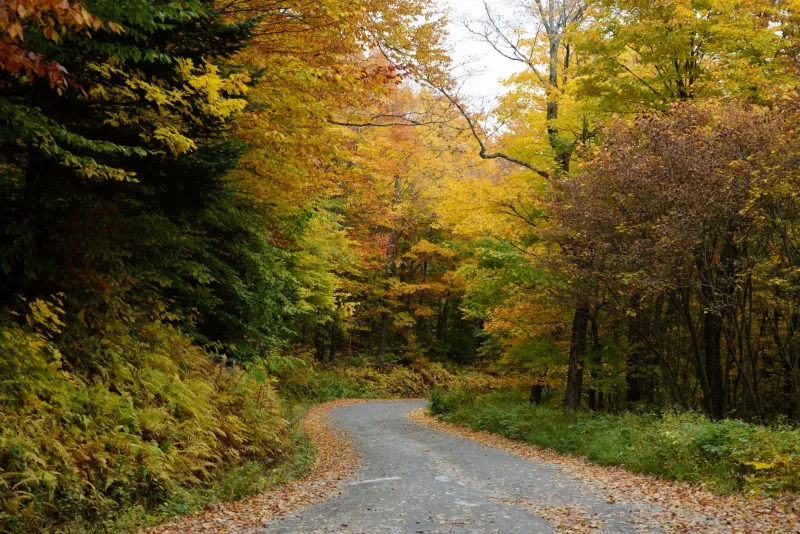
There's a moment most Vermont runners know well. You crest a long climb somewhere outside Burlington, lungs working hard, legs burning just enough to remind you they're alive, and you think: this is brutal. What you probably don't think is: this is making me faster at sea level in Chicago next October. But it is.
Vermont isn't the Rockies. Nobody's training at 10,000 feet here. But the state's unique combination of moderate elevation gain, relentless rolling terrain, and unpredictable conditions creates physiological adaptations that quietly stack the deck in your favor — and the science backs it up.
What Elevation Actually Does to a Runner's Body
At even modest elevations — think 1,000 to 3,000 feet, which covers a solid chunk of Vermont's popular running routes — the air carries slightly less oxygen per breath than at sea level. Your body notices. To compensate, it gets to work: producing more red blood cells, increasing plasma volume, and improving the efficiency of oxygen delivery to working muscles.
Dr. Sarah Hennessey, an exercise physiologist who works with endurance athletes in the Northeast, puts it plainly: "You don't need to be altitude training in Colorado for the adaptations to kick in. Consistent exposure to moderate elevation, especially combined with hilly terrain that forces cardiovascular output, creates meaningful changes in how efficiently a runner uses oxygen. When that runner drops down to race at sea level, suddenly the air feels richer. Their pace feels easier at the same effort level."
That phenomenon — sometimes called the "sea-level bounce" — is well documented in elite athletics. But it's not exclusive to professional runners training at altitude camps. Everyday marathoners in Vermont are getting a version of it every time they lace up for a long run on terrain that never quite lets them coast.
Vermont's Terrain: A Natural Interval Workout
Beyond the elevation itself, Vermont's topography essentially programs variety into your training whether you plan for it or not. Flat stretches are rare. Most routes alternate between demanding climbs and technical descents, which means your legs are constantly switching between muscle recruitment patterns.
Kira Bouchard, a Burlington-based runner who has qualified for Boston three times using exclusively Vermont training, describes her home routes as "accidental fartleks."
"I never set out to do hill repeats," she says, laughing. "Vermont just does that to you. One mile you're grinding uphill and your heart rate is through the roof, the next you're floating downhill and trying to control your form. When I ran a flat marathon in Columbus a few years back, I felt like I had a secret weapon. The flat just felt easy compared to what I'd been training on."
Sports scientists call this neuromuscular cross-training. By regularly recruiting different muscle fibers across varied terrain, Vermont runners build resilience that pure flat-road training doesn't develop. The result is a runner who is better at managing fatigue across 26.2 miles — wherever those miles happen to fall.
How to Actually Structure Elevation-Based Training Blocks
Knowing Vermont's terrain is working for you is one thing. Structuring your training to maximize that advantage is another. Here's how local coaches and athletes suggest approaching it.
Build your long runs around elevation gain, not just mileage. Instead of logging a flat 18-miler, seek out routes with 1,500 to 2,500 feet of cumulative gain. The extra cardiovascular demand at a controlled pace builds aerobic capacity more effectively than adding extra flat miles.
Use Vermont's hills for tempo work. Sustained climbs at a comfortably hard effort — where you can speak in short sentences but not full paragraphs — are excellent for building lactate threshold. Coach Dan Merrill, who trains a small group of competitive runners out of Montpelier, recommends "climbing tempos" as a core session: 20 to 40 minutes of sustained uphill effort at tempo pace, once or twice per week during peak training.
Don't neglect the downhills. Controlled downhill running strengthens the quads in a way flat running simply can't replicate. This matters enormously in the late miles of a marathon, when quads are the first thing to fail. Practice relaxed, efficient downhill form regularly and your legs will thank you at mile 22.
Taper strategically when targeting a flat race. If you're racing Vermont City Marathon or another course with significant elevation, keep your hill training consistent through the taper. If you're using Vermont training to prep for a flatter race, ease off the biggest climbing sessions two to three weeks out and let your body recalibrate to more even effort.
The Mental Edge You Might Not Expect
Vermont runners also pick up something the data doesn't always capture: mental toughness earned through hard terrain. When you've trained through February sleet on a rural road that climbs 400 feet before mile two, a flat city marathon in perfect spring weather starts to feel almost indulgent.
"There's a confidence that comes from hard training," says Bouchard. "When race day comes and the course is easier than what I trained on, I feel ready. Not just physically. Mentally, I know I've done harder things."
That psychological resilience — the quiet certainty that you've already earned the finish line through months of demanding preparation — is maybe Vermont's most underrated competitive advantage.
So the next time you're grinding up a back-road climb and wondering why you signed up for this, remember: your body is doing something remarkable. You're not just surviving Vermont's terrain. You're letting it make you better.