Why Vermont's Hills Are the Best Kept Secret in Marathon Training
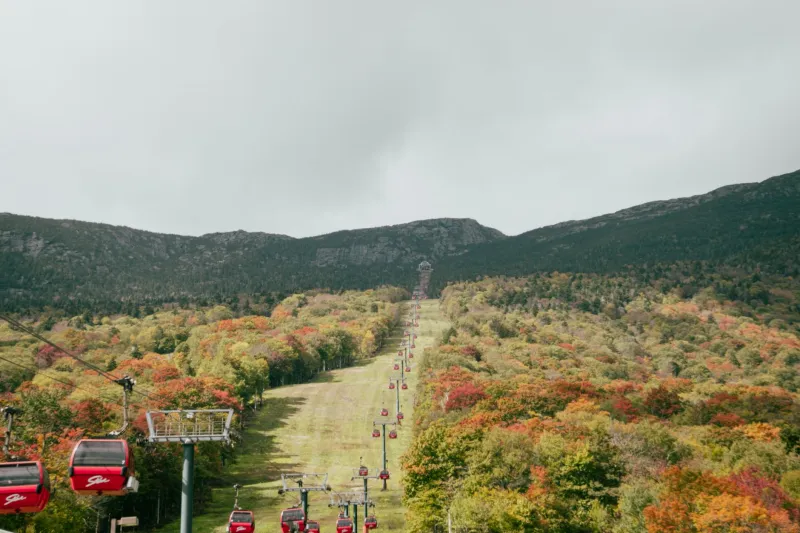
Ask any runner who's trained through a Vermont winter and survived to tell the tale, and they'll probably say something like this: "The hills nearly broke me — and then they made me." It's a sentiment you hear a lot around here, and honestly? The science backs it up.
Vermont's geography is, by almost any measure, relentless. From the shores of Lake Champlain sitting at roughly 100 feet above sea level to the peaks of the Green Mountains pushing past 4,000 feet, the state serves up an elevation buffet that most runners in flatter parts of the country never have to deal with. But what feels like punishment in October tends to feel like a superpower come race day in May.
The Cardiovascular Case for Going Uphill
When you run uphill, your body doesn't just work harder — it works differently. Your heart rate climbs faster, your muscles recruit more motor units, and your lungs push toward their functional limits. Do that enough times on the back roads of Williston or the trails threading through Stowe, and your aerobic system quietly, steadily gets stronger.
Coach Dana Merrill, who runs a small training group out of the Burlington area and has paced dozens of runners through Vermont City Marathon prep cycles, puts it plainly: "Flat training teaches your body one speed at one effort level. Vermont terrain forces constant adaptation. Your cardiovascular system learns to handle surges, recover on the fly, and settle back into pace — and that's exactly what you need when mile 20 hits and the race gets real."
That kind of adaptation isn't just anecdotal. Exercise physiologists have long documented that uphill running increases VO2 max — the measure of how efficiently your body uses oxygen — more rapidly than equivalent flat mileage. The added resistance means your heart has to pump more blood per stride, and over weeks and months of hill training, that cardiac output improves meaningfully.
From Lake Level to Mountain Passes: Vermont's Natural Gym
One of the unique things about training in Vermont is the sheer variety of terrain available within a short drive — or even a single long run. You can start a workout near the Burlington waterfront, barely above lake level, and within a few miles find yourself grinding up a grade that would make a treadmill incline setting blush.
Long-time Vermont runner and two-time Vermont City Marathon finisher Carolyn Jette describes her Saturday long runs as "accidental altitude training." She lives in Hinesburg, a town tucked between rolling farmland and wooded ridgelines, and her standard 18-miler involves roughly 2,200 feet of cumulative elevation gain. "I didn't design it that way on purpose," she laughs. "That's just what's out my front door. But when I ran a flat marathon in Ohio a few years ago, I felt like I was flying. My legs didn't know what to do with the lack of resistance."
That experience — feeling unusually strong on flat courses after months of hilly Vermont training — is something local runners talk about constantly. And it makes physiological sense. When your muscles have been conditioned to push against consistent resistance, a flat course removes that demand and lets you redirect that energy into pure forward momentum.
Practical Ways to Use Vermont's Terrain in Your Training Plan
You don't have to move to the mountains to take advantage of Vermont's elevation. Whether you're a Burlington local or traveling to run the Vermont City Marathon, here are some ways coaches recommend building hill work into your preparation:
1. Weekly Hill Repeats Find a hill with 150–300 feet of gain and run repeats at a hard effort — think 5K pace or slightly harder. Recover on the descent. Six to eight repeats, once a week, builds both strength and mental toughness.
2. Long Runs With Intentional Elevation Stop avoiding the hilly route. Plan at least two of your long runs each training cycle on courses with 1,500 feet or more of cumulative gain. The early miles will feel harder, but your aerobic base will thank you later.
3. Strides on Gentle Grades After an easy run, do four to six strides (short accelerations of about 20 seconds) on a gentle uphill. This builds power in your glutes and hamstrings — the exact muscles that carry you through the back half of a marathon.
4. Trail Running as Cross-Training Vermont's trail network is extraordinary, and even a slow shuffle through the woods on rolling terrain delivers serious cardiovascular benefit. The uneven footing also strengthens stabilizer muscles that road running tends to neglect.
The Mental Edge Nobody Talks About
Beyond the physical adaptations, there's a psychological dimension to hill training that's harder to quantify but just as real. Running hard uphill is uncomfortable. It tests your willingness to push through discomfort and keep your form from falling apart when your lungs are screaming.
Coach Merrill calls it "building your pain vocabulary." When you've run enough Vermont hills, you recognize the sensation of being at your limit and you've practiced pushing through it. That recognition — and the confidence it builds — is invaluable in the final miles of a marathon, when the race truly begins.
"People think marathons are won on race day," says Merrill. "They're won on the hills in February when nobody's watching."
Embracing the Climb
Vermont isn't going to flatten out anytime soon, and that's a good thing. The same terrain that makes a Tuesday run feel like a sufferfest is quietly building the engine you'll need when you cross the start line on race day. The hills are hard. They're supposed to be. And every time you crest one, you're a slightly stronger marathoner than you were at the bottom.
So next time your GPS ticks over another 100 feet of elevation gain and your legs start to complain — smile a little. You're doing something most runners in this country never get the chance to do. You're training in Vermont.