Cool, Calm, and Fast: How Vermont's Spring Race Timing Gives You a Real Edge
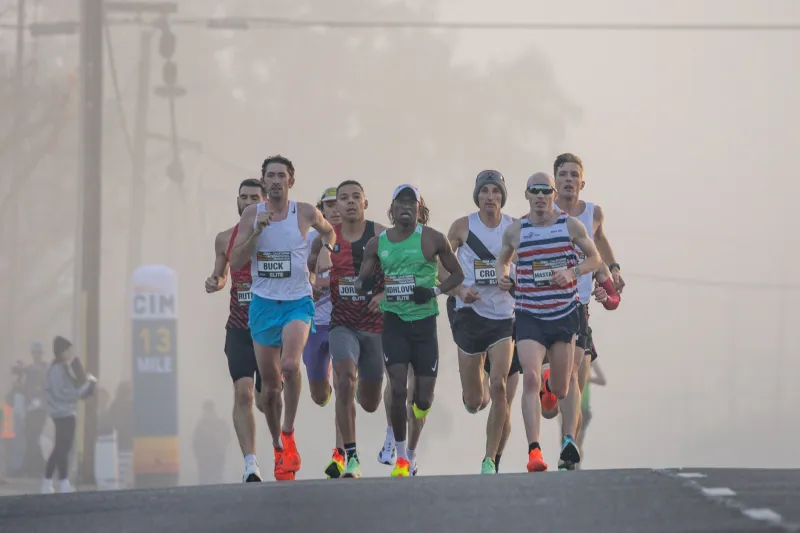
Let's be honest. Nobody runs their best marathon in 85-degree heat with humidity thick enough to wear. Yet thousands of runners every year sign up for summer and early fall races in cities where that's exactly what they're walking into. Meanwhile, up here in Burlington, we're lacing up on a late May morning when the air is crisp, the Lake Champlain breeze is doing its thing, and conditions are about as close to perfect as road racing gets.
That's not luck. That's geography doing you a favor.
If you've ever wondered why Vermont City Marathon runners seem to come away with strong finish times and even stronger smiles, the answer isn't just the scenery. It's the science behind when and where this race happens — and how you can use that to your advantage.
What the Weather Actually Does to Your Body on Race Day
Here's the thing about temperature and marathon performance: the research is pretty clear. Most exercise physiologists point to a sweet spot somewhere between 44°F and 59°F as the range where runners perform best over long distances. Go much above that, and your body starts diverting blood flow to the skin to cool itself down — blood that would otherwise be powering your muscles.
Burlington in late May typically sits right in that range during race morning hours. We're talking mid-40s to low 60s, with relatively low humidity compared to the sticky mid-Atlantic summers that make races in places like Washington D.C. or Charlotte feel like running through a sauna.
For every 10 degrees above that optimal zone, studies suggest runners can lose anywhere from 1 to 3 percent of their performance. Over 26.2 miles, that math adds up fast. A runner targeting a 4-hour finish could realistically lose 5 to 10 minutes just from suboptimal temperatures — and that's before accounting for the mental grind of overheating.
Vermont City Marathon runners sidestep that entirely.
The Humidity Factor Nobody Talks About Enough
Temperature gets all the attention, but humidity is often the sneakier villain. High humidity prevents sweat from evaporating efficiently, which is your body's primary cooling mechanism. When sweat just kind of sits there on your skin instead of evaporating, your core temperature climbs faster, and your perceived effort skyrockets.
Vermont's spring air is generally drier than what you'd find in coastal or southern cities during their summer race seasons. That means your cooling system actually works the way it's supposed to on race day. You sweat, it evaporates, your body stays regulated. Simple, effective, and wildly underrated.
Compare that to running a late June race in Houston or a July event in a humid Midwest city, and the difference isn't just comfort — it's physiology.
How to Build Your Training Calendar Around a Late May Peak
One of the most strategic things you can do as a marathon runner is align your training peak with your target race date. Vermont City Marathon's late May timing creates a really clean training window for most runners in the Northeast and beyond.
Here's the basic structure that works well:
Start your base phase in January. Yes, that means training through Vermont winters, which — as any local will tell you — comes with its own set of rewards. Cold-weather training builds mental toughness, forces you to run by effort rather than pace, and actually improves your aerobic efficiency. By the time spring arrives, you've earned it.
Build through March and April. This is your peak mileage window. The days are getting longer, temperatures are slowly climbing out of the deep freeze, and you're hitting those long runs as the trails and roads start to clear. Your body is adapting, your aerobic base is solid, and you're not yet dealing with the heat stress that summer runners face during their build.
Taper into May. The two to three weeks before race day, you pull back the volume, sharpen your pacing, and let your body absorb all that hard work. By the time you're standing on the start line in Burlington, you're fresh, you're fit, and the conditions are working with you instead of against you.
Compare this to someone training for a September marathon in a hot climate. They're doing their longest, hardest training runs in July and August — the worst possible time to be logging 20-milers in many parts of the country. Heat stress during training can lead to slower paces, harder recovery, and a compromised peak. Vermont runners in a spring training cycle don't have that problem.
The Psychological Edge Is Real Too
There's something that happens when you step onto a start line and the conditions feel right. You relax. Your race-day anxiety has one less thing to feed on. You've trained for the distance, you've visualized the course, and you're not secretly terrified that the heat index is going to derail your goal pace by mile 10.
Vermont City Marathon runners often talk about how the race morning feels almost calm — in the best way. The energy is there, the crowd is buzzing, but the environment isn't working against you. That psychological headspace matters more than people give it credit for. A runner who isn't spending mental energy managing overheating is a runner who can actually execute their race plan.
Why This Matters If You're Chasing a PR
If a personal record is on your radar, the Vermont City Marathon's spring timing should be a serious part of your strategic thinking. You're not just picking a race — you're picking a set of conditions. And conditions matter enormously when you're trying to run your best.
Summer marathons have their place. Fall races can be beautiful. But if you want a realistic shot at running fast, racing in Vermont in late May stacks the deck in your favor in ways that are measurable, physiological, and very much real.
The mountains are waiting. The lake breeze is ready. And the finish line in Burlington is one of the most satisfying ones you'll ever cross — especially when you get there feeling like you actually had something left in the tank.
That's the Vermont advantage. Use it.