Not Too High, Not Too Low: Why Vermont's Altitude Is the Goldilocks Zone for Marathon Performance
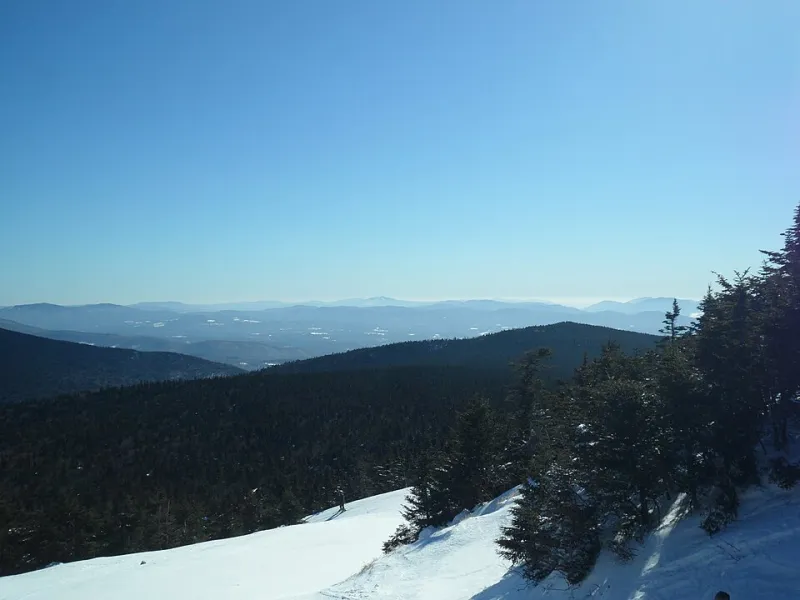
Photo: EgorovaSvetlana, CC BY-SA 4.0, via Wikimedia Commons
When runners talk about altitude training, the conversation usually jumps straight to places like Boulder, Colorado, or the Rift Valley in Kenya — locations sitting well above 5,000 feet where elite athletes go to supercharge their red blood cell counts. Vermont doesn't get invited to that conversation very often. And honestly? That's a mistake.
The Green Mountains sit in a range of roughly 500 to 1,500 feet above sea level, depending on where you're running. That might sound modest. It is modest. But modest, it turns out, might be exactly what most recreational marathoners need.
What Actually Happens to Your Body at Elevation
Let's start with the basics. As you gain altitude, barometric pressure drops. That means each breath you take delivers slightly fewer oxygen molecules to your lungs. Your body responds by working harder — your breathing rate increases, your heart pumps more blood per minute, and over time, your system begins producing more red blood cells and boosting hemoglobin concentration to compensate.
At high altitude — typically above 8,000 feet — these adaptations are dramatic and well-documented. Runners at those elevations can see measurable increases in VO2 max after several weeks of training. That's the whole premise behind "live high, train low" protocols used by elite programs.
But here's the catch: training at high altitude is genuinely hard. Your performance drops. Your paces slow. Recovery takes longer. And altitude sickness — headaches, nausea, disrupted sleep — is a real concern for anyone who ascends too quickly.
Vermont sidesteps all of that.
The 500–1,500 Foot Advantage
At Vermont's elevations, you're not going to trigger the physiological stress responses associated with true altitude. You won't get altitude sickness training on the trails around Stowe or Bolton Valley. You won't need days of acclimatization before your first long run.
What you will get is a mild but consistent aerobic challenge that accumulates over months of training.
Research suggests that even modest elevations — particularly when combined with hilly terrain — place a measurable additional load on your cardiovascular system. Your heart rate climbs slightly faster on uphills. Your breathing has to work a little harder to keep pace. Over a full training cycle, that extra demand builds aerobic capacity in a way that flat, sea-level training simply doesn't replicate.
Think of it as resistance training for your lungs and heart. Not the dramatic kind. The steady, sustainable kind that shows up at mile 22 when your competitors start fading.
How Vermont Compares to the Big-Name Altitude Destinations
Let's put some numbers in perspective.
- Flagstaff, Arizona: 6,900 feet. Elite training hub. Significant altitude sickness risk for newcomers. Performance drops 10–15% until acclimatized.
- Boulder, Colorado: 5,430 feet. Home to dozens of professional runners. Requires two to four weeks of adjustment before quality workouts are productive.
- Iten, Kenya: Roughly 7,800 feet. Birthplace of some of the world's fastest marathoners. Extreme aerobic stimulus. Extreme recovery demands.
- Burlington, Vermont: About 200 feet. But get 20 miles east toward Montpelier or north toward Johnson? You're training at 800–1,200 feet with significant elevation change throughout your run.
That last part matters. Elevation change — the rolling, relentless up-and-down of Vermont's roads and trails — creates cardiovascular stress that static altitude alone doesn't. A runner logging miles in Craftsbury or along the roads outside Middlebury is getting a genuinely different aerobic stimulus than someone running the same distance on a flat course in Phoenix at 1,100 feet.
The Race-Day Payoff
Here's where it gets interesting for Vermont City Marathon runners specifically.
The marathon course sits close to lake level, which means on race day, your body is operating at an elevation lower than most of your training runs. That's a real, measurable advantage. Muscles that trained slightly oxygen-deprived perform noticeably better when suddenly given full sea-level air. It's a milder version of the "live high, train low" effect — but it's genuine.
Runners who have spent months grinding up and down Vermont's grades arrive at the start line in Burlington with cardiovascular systems that are quietly, efficiently over-prepared for the demands of the course.
How to Make the Most of It
You don't need to move to Killington to leverage this. A few practical ways to maximize Vermont's altitude advantage:
Seek out the elevation in your long runs. Don't just log miles — find routes that take you up into the 1,000+ foot range for at least a portion of your weekly mileage. The hills around Stowe, Craftsbury, and the Mad River Valley are particularly good for this.
Don't avoid the climbs in tempo work. It's tempting to run your quality workouts on flat stretches. Occasionally, don't. A tempo effort up a sustained Vermont grade builds aerobic ceiling in ways that flat-road tempos can't match.
Treat race week like a descent. When you taper and head into Burlington for race weekend, recognize that your body is about to perform at a slightly lower elevation than it's been training at. That's a tailwind. Trust it.
Log your effort, not just your pace. On hilly Vermont training routes, pace is a poor metric. Heart rate or perceived effort gives you a much better picture of your actual aerobic load — and a more accurate sense of the fitness you're building.
Vermont will never replace Kenya or Colorado as an altitude training destination. It's not supposed to. What it offers is something more accessible and arguably more sustainable: a natural aerobic challenge that builds quietly over a training season, without the risks, the expense, or the performance penalties of true high-altitude work.
For most recreational and competitive marathoners, that's not a consolation prize. That's the sweet spot.