Four Seasons, One Runner: How Vermont's Weather Builds the Mental Toughness You Can't Train Any Other Way

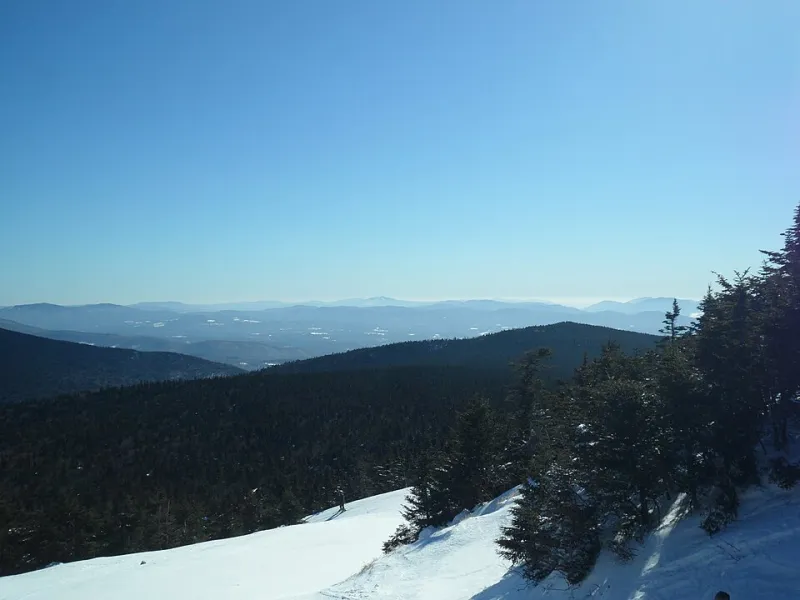
Photo: Sham, CC BY-SA 4.0, via Wikimedia Commons
It's 6 a.m. in January. The temperature is nine degrees. The wind is coming off Lake Champlain like it has a personal grudge. And somewhere on a snow-packed road outside Burlington, a Vermont marathoner is lacing up anyway.
This isn't a story about suffering for suffering's sake. It's a story about what that moment — repeated dozens of times across a Vermont winter — actually does to a runner's mind. And why, come race day in May, it shows up in ways that are genuinely hard to explain unless you've lived it.
The Four-Season Reality
Vermont doesn't do mild. The seasonal swings here are dramatic by almost any US standard. Winters routinely bring sub-zero wind chills, icy roads, and weeks where outdoor running requires serious gear and serious commitment. Mud season in March and April adds its own particular brand of misery — soft trails, soaked shoes, footing that keeps you honest. Summer humidity rolls in and makes easy runs feel hard. Fall is gorgeous but fleeting, and savvy runners know it's also the window where the real fitness gets built before the cold returns.
For runners training for Vermont City Marathon, this isn't a backdrop. It's the curriculum.
What Sports Psychology Says About Adversity Training
Dr. Jim Taylor, a sports psychologist who has worked with endurance athletes, has written extensively about what he calls "mental muscles" — the psychological capacities that, like physical ones, are built through progressive stress and recovery. Discomfort, uncertainty, and environmental challenge are among the most effective stimuli for developing those muscles.
The principle maps directly onto what Vermont runners experience across a full training calendar. When you've dragged yourself out for a 16-miler in February sleet, you've done something your nervous system remembers. You've proven to yourself, in a concrete and undeniable way, that you can keep going when conditions are terrible.
That proof doesn't evaporate. It shows up at mile 20 of a marathon when your legs are screaming and your inner voice starts suggesting you slow down. Vermont runners have a library of cold, wet, dark, miserable mornings to draw on. Fair-weather runners don't.
"The training environment becomes part of your identity," says one Vermont City Marathon finisher who completed her first marathon after training through two full Vermont winters. "When race day is hard — and it's always hard — I just keep thinking, 'I've been through worse.' And I have. I literally have."
The Psychology of Seasonal Variability
There's a specific mental skill that Vermont's training calendar develops that doesn't get enough credit: adaptability.
Race day almost never goes exactly as planned. Weather shifts. Your stomach rebels at mile 14. A shoe feels wrong. The course is harder than you expected. Runners who have trained in a single, consistent environment — perfect 65-degree mornings, flat paths, no wind — often struggle when conditions deviate from the script. Their mental model for running is narrow.
Vermont runners, by contrast, have been forced to adapt constantly. They've learned to recalibrate their expectations mid-run. They know what it feels like to start a workout feeling terrible and finish it feeling okay. They've run in rain, in heat, in cold, on ice, in mud. Their mental model for running is wide.
When something goes sideways on race day, they have a much larger toolkit to draw from.
The Gift of the Hard Seasons
Talk to enough Vermont marathon finishers and a pattern emerges. Almost universally, they don't describe the brutal training days with resentment. They describe them with something closer to gratitude — or at least, retrospective appreciation.
"Winter runs are when I figured out who I actually am as a runner," says one Burlington-based runner who has completed Vermont City Marathon three times. "In the summer you can kind of coast on good conditions. In January you can't fake it. You either go or you don't."
That binary — go or don't — repeated across months of difficult training, builds a decision-making reflex. Vermont runners get very good at choosing to go. And that reflex is exactly what carries you through the second half of a marathon.
Practical Ways to Lean Into the Seasons
If you're training for Vermont City Marathon, here's how to deliberately use Vermont's seasonal variability as a mental training tool — not just an obstacle to survive:
Name the discomfort. When you're out in genuinely awful conditions, consciously acknowledge it: "This is hard. I'm doing it anyway." That simple act of recognition reinforces the mental pattern you're building.
Keep a training log that includes conditions. Most runners track pace and mileage. Add a column for weather and how you felt. Over a season, you'll start to see your own resilience pattern emerge — and that data becomes motivating.
Don't always wait for the weather to improve. It's fine to skip genuinely dangerous conditions. But if you find yourself consistently waiting for perfect weather before heading out, you're leaving mental fitness on the table.
Reframe the mud season miles. March and April in Vermont can feel like running through wet cement. But those miles — slow, sloppy, uncomfortable — are building patience and persistence that translate directly to the back half of a race.
Celebrate the ugly runs. The clean, fast, beautiful training days are easy to feel good about. Make a point of also celebrating the ones where everything was hard and you did it anyway. Those are the miles that matter most.
What Fair-Weather Runners Are Missing
None of this is meant to romanticize misery. Running in terrible conditions for its own sake isn't the point. The point is that Vermont's training environment — by virtue of being genuinely challenging across all four seasons — creates psychological adaptations that are difficult to manufacture artificially.
Runners who train year-round in San Diego or Miami or Phoenix develop tremendous aerobic fitness. They can be exceptional athletes. But they often arrive at the back half of a difficult race without the same depth of mental reserves that a Vermont runner has been quietly building since November.
The cold was never the enemy. It was the training partner you didn't know you needed.